Why a kilim runner works where other rugs wear out
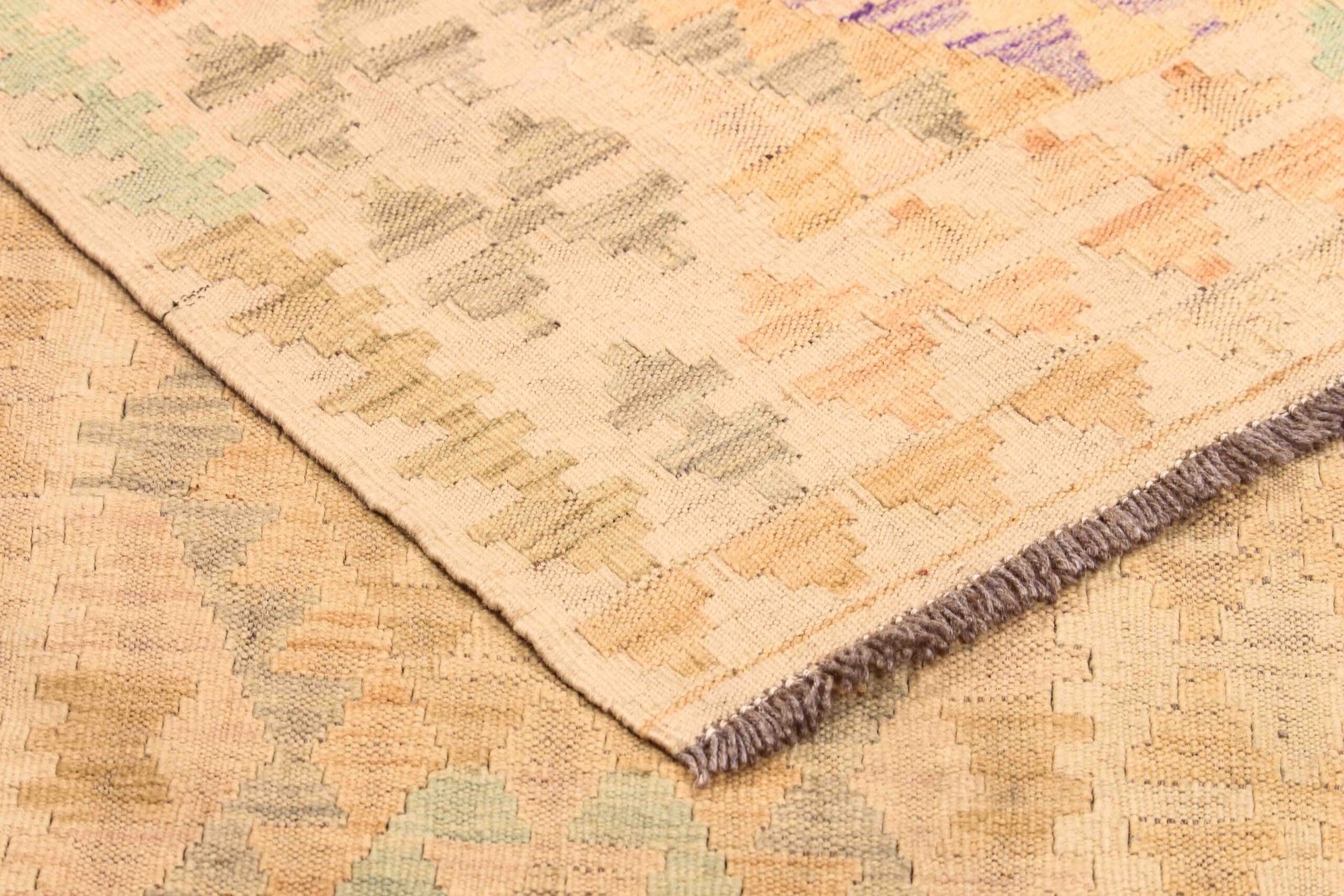
A kilim is a flatweave. There’s no pile and no knots — the pattern is made by the weft threads themselves, passing over and under the warp. That single fact is why it belongs in a hallway.
With no pile, there’s nothing to crush. A tufted runner in a busy hall develops a visible walking track down the middle within a year or so, because the fibres bend and stay bent. A flatweave has no fibres standing up to bend.
Wool does the rest. The fibre has a natural crimp that springs back under load, and its lanolin coating means dry dirt sits on the surface instead of working into it — which is why a good wool rug vacuums clean rather than slowly going grey.
Add to that the density of hand-weaving. There’s more material per square metre in a handwoven runner than in anything made at speed, and in the strip of floor your household walks down several hundred times a week, that density is the whole difference.
Reversible runner rugs, so it lasts twice as long
Because the pattern is the structure rather than something applied to a backing, a kilim has no right and wrong side. Turn it over and you get the same rug.
That matters more in a hallway than anywhere else in the house, because a hall doesn’t wear evenly — it wears in a strip. The middle metre takes almost everything while the ends stay nearly new. When that strip starts to show, flip the runner and you have a second full life from the same piece.
A tufted or printed runner can’t do this. One side is pattern and the other is backing, so when the pattern goes, the rug goes.
It’s worth doing the arithmetic. A £329 runner that serves ten years across two sides costs less than a £60 one replaced every eighteen months, and it looks considerably better for the whole decade.
What size runner rug do you need?
More returns happen over size than anything else, and nearly all of them come from measuring the wrong thing.
Measure the walking path, not the wall. The length that matters is the clear run of floor people actually use — not the full length of the hallway including the bit behind the door or under the radiator.
Take 15cm off each end. A runner that reaches wall to wall reads as carpet that didn’t quite fit. Leaving floor at both ends is what makes it look deliberate.
Round down, never up. Too short looks considered. Too long looks wrong, and you can’t take it back off.
Tape it out before you buy. Mark the dimensions on the floor with masking tape, or lay down sheets of newspaper. Two minutes of this saves most sizing mistakes.
How wide for a hallway?
| Your hallway |
Runner width |
Floor showing each side |
| 90cm |
65–70cm |
10–12cm |
| 105cm |
70–80cm |
12–17cm |
| 120cm |
75–90cm |
15–22cm |
Aim for 10–15cm of floor visible on each side. In a genuinely tight hall you can go down to about 7.5cm, but below that it stops looking like a choice. Centre it — the gap should be even on both sides.
How wide for stairs?
Narrower, deliberately. You want the timber to show.
| Staircase width |
Runner width |
Timber showing each side |
| 80cm |
60cm |
10cm |
| 86cm |
65–70cm |
8–10cm |
| 90cm |
70–75cm |
7.5–10cm |
| 100cm |
75–80cm |
10–12.5cm |
Measure the narrowest tread, not the widest. If your staircase tapers even slightly, the narrow end sets your limit.
For length on a staircase: (tread depth + riser height) × number of steps, then add about 10% for the curve over each nosing. A typical UK step is around 25cm deep with a 20cm riser, so roughly 45cm per step.
How long for a kitchen?
Size to the working strip — the run between the units, or the length you stand at — not the room.
| Kitchen |
Runner length |
| Small or square |
150–180cm |
| Galley |
200–250cm |
| Long run or island |
250–300cm |
One thing to expect: every runner here is woven by hand, so allow 1–3cm either way on any stated dimension.
Will it fit under your doors?
Usually, yes — and this is where a flatweave earns its keep.
A kilim runner is 3–5mm thick. With a thin underlay you’re at 6–8mm. A tufted or shaggy runner is 10–15mm before you add anything, and closer to 20mm once you do.
Most UK internal doors clear somewhere between 6mm and 10mm above the finished floor. So a flatweave usually passes underneath where a pile runner means taking the door off its hinges and planing the bottom.
To check yours: close the door and slide a ruler underneath. Whatever clears the gap will work.
Worth checking the front door too, which often has tighter clearance than internal doors, and any threshold strips between rooms — set the end of the runner before a strip rather than over it.
Where a kilim runner goes
Hallways Juoksumatot
The default use, and what most of these runners are made for. Our longest pieces, 70–90cm wide, laid down the walking line.
Measure the path people actually tread, not the full length of the hall, and leave floor showing at both ends. If your hallway runs longer than anything in the range, use two runners with a deliberate 20–30cm gap, broken at a doorway or the foot of the stairs. A planned gap looks like a decision; a 5cm gap looks like you ran out.
A runner also makes a narrow hall read as longer rather than tighter, as long as you leave bare floor on each side. Covering the width edge to edge is what turns a corridor into a tunnel. Run the pattern lengthways, and in a tight space choose a repeating geometric over one large central motif — a big medallion needs room around it that a narrow hall hasn’t got.
Put a doormat inside the front door and let that take the grit, the road salt and the rain. A mat is cheap and replaceable; a handwoven runner isn’t.
Stairs Juoksumatot
A stair runner must be fixed down. Never loose-laid. This matters more than anything else on this page.
A rug that simply sits on a staircase will move — not immediately and not obviously, but it creeps a few millimetres with every footfall until an edge lifts at the nosing. Someone catches it on the way down, usually in socks, usually in a hurry. Underlay helps with comfort and grip, but underlay alone does not hold a runner on stairs.
The standard methods are stapling into the back of each tread riser, gripper rod fitted into the angle of each step, or stair rods, which hold the runner at the base of each riser and look right on a period staircase. If your stairs are straight and you’re confident with a staple gun, it’s a manageable afternoon. If you have winders — the wedge-shaped steps on a turn — get a carpet fitter. Winders are where amateur fittings go wrong, and they’re the steps people fall on.
As for why a kilim suits stairs in the first place: at 3–5mm it moulds tight over the nosing instead of standing proud of it, and there’s no pile to crush in the narrow band along each tread edge where stair wear concentrates.
Kitchens Juoksumatot
Shorter runners, sized to the strip you stand on, in patterns busy enough that a splash doesn’t announce itself.
Wool’s lanolin makes it genuinely spill-resistant for a short while — a spill beads and sits on the surface for a minute or two before it penetrates, which is long enough to blot it. The same spill on cotton soaks straight in. Wool also resists odours and is naturally flame-resistant, which is not nothing near a hob.
The caveat is washing: wool felts and shrinks in a machine, so these are spot-clean only. If you need a runner you can put through a wash every month, buy a synthetic one — we’d rather tell you now than take the return.
Choose pattern over plain. A busy geometric in mixed tones hides a great deal, because the eye reads the pattern rather than the mark. Go darker for the stretch in front of the hob, which is where the oil lands.
Wool or synthetic for a busy floor?
Worth being straight about this, because they’re genuinely different purchases.
Villa springs back instead of flattening, sheds dry dirt rather than holding it, and ages into something with character rather than something that just looks tired. It takes dye deeply, so the colours stay rich for years. It is not machine washable, and it costs more at the outset.
Synthetic goes in the washing machine, which is a real advantage with a toddler or a muddy dog. It’s cheaper. It also flattens underfoot and doesn’t recover, so a synthetic runner in a hallway often looks worn out within two or three years even though the fibres are technically intact.
So: if you need to wash the thing monthly, buy synthetic — we don’t sell it, and we’d rather say so than take the order and the return. If you want a runner that will still look right in ten years and will have earned some character along the way, that’s what wool is for.
Keeping a runner where you put it
A flatweave is light. That’s the trade-off for being thin, and it means the runner needs a bit of help staying put on a hard floor.
Use a full underlay rather than corner grippers. Grippers hold the corners and let the middle creep, which is how runners end up concertinaed against a skirting board. A full underlay holds the whole footprint, adds a little cushioning underfoot, and stops any grit trapped beneath from scuffing the floor finish.
On stairs, underlay alone is not enough — the runner has to be mechanically fixed to every tread.
Looking after a wool runner
Less work than people expect, and most of it is one habit.
Grit is the real enemy. Sand and dry dirt that works down into the weave acts like fine sandpaper every time someone walks across it. Vacuum regularly and that problem never starts.
Vacuum across the weave, not along it, on suction only or with a brush head. Running a beater bar along the weave is unnecessary and unkind to the fibre.
Turn it end to end every three or four months. The door end takes far more traffic than the far end, and rotating evens that out.
Spot-clean with a damp cloth and a little mild wool detergent, blotting rather than rubbing. Deal with spills straight away — wool’s lanolin buys you a few minutes before anything soaks in.
Never soak it and never machine wash it. Wool felts and shrinks, and it won’t come back.
For anything beyond a spill, a specialist rug cleaner will handle a handwoven wool runner properly.
How these are woven
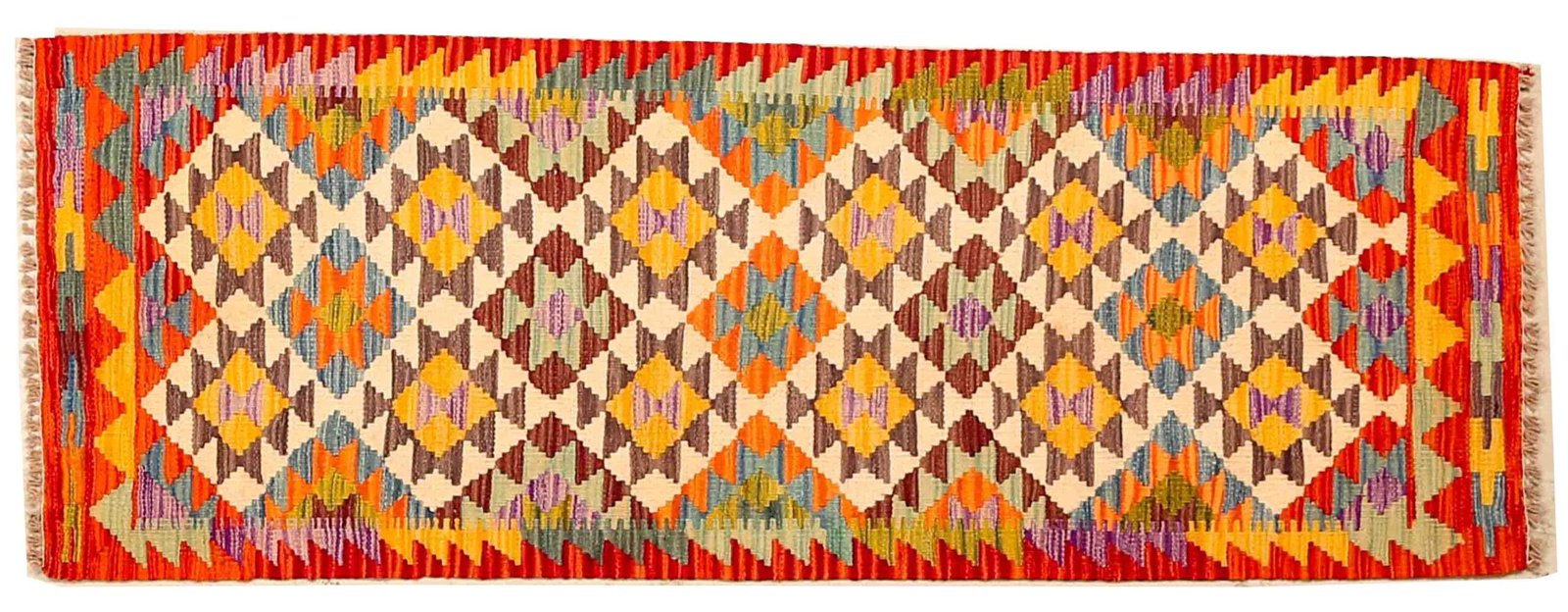
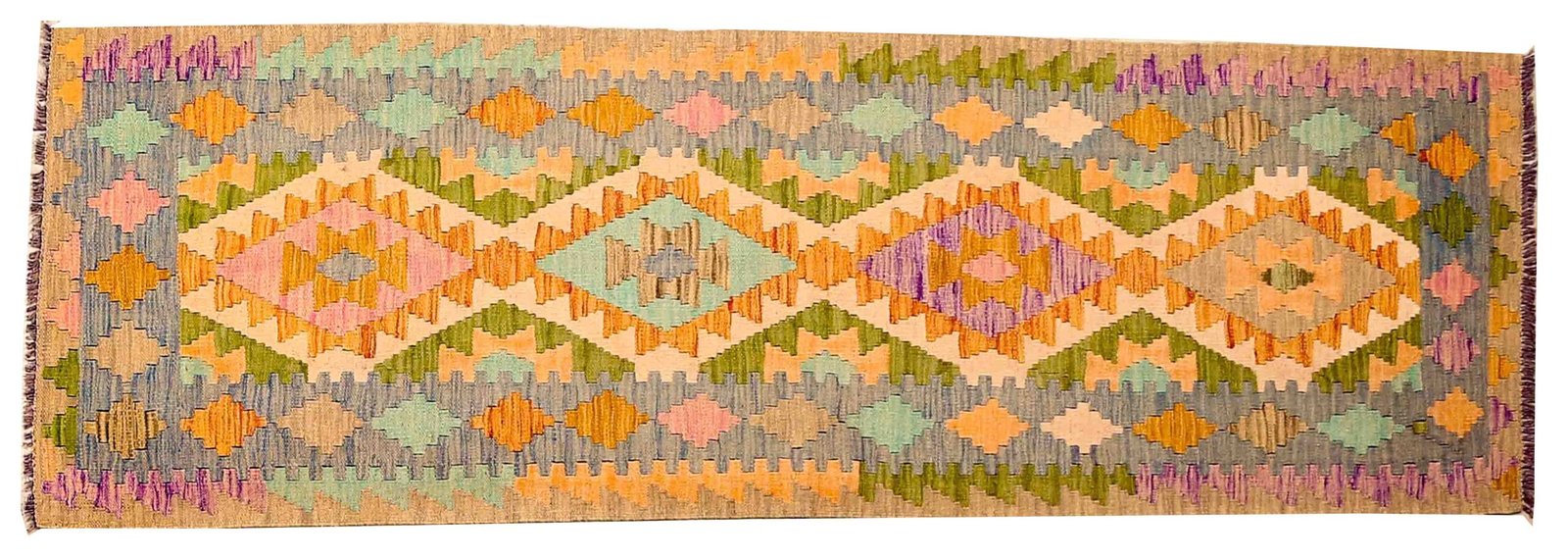
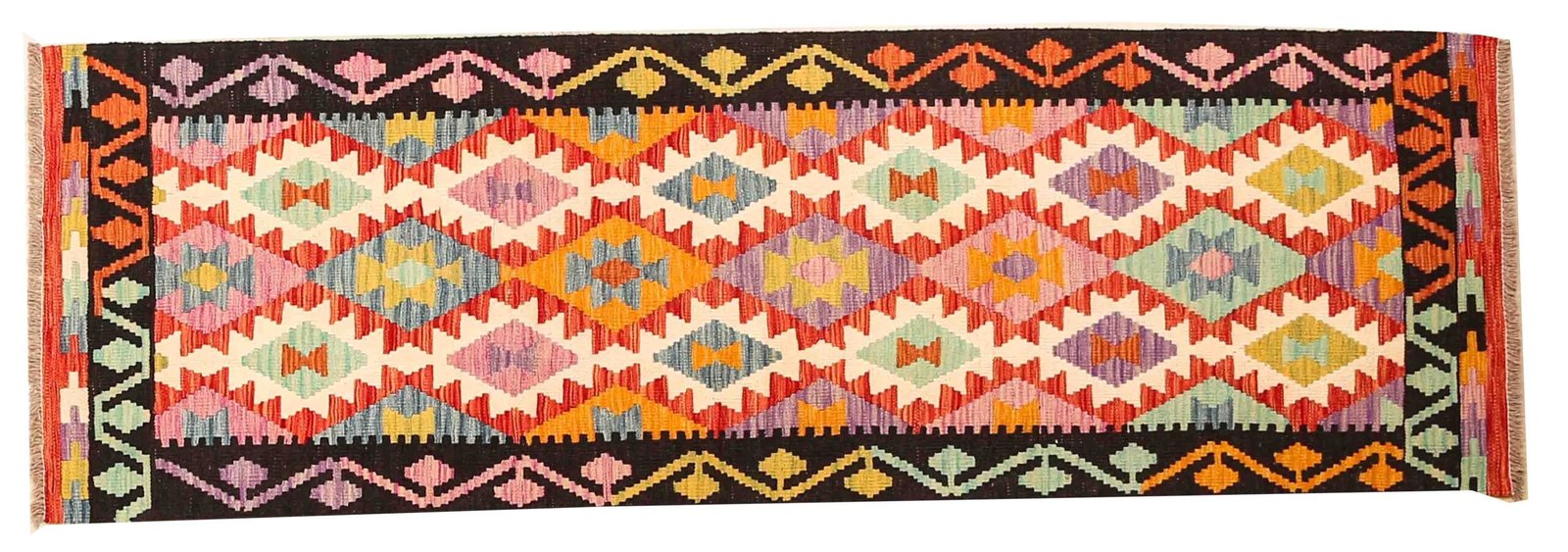
Our runners are made in the Turkish kilim tradition — the flatweave technique and the geometric design language that kilim is known for — and are handwoven in Pakistan by weavers who learned the craft from the generation before them.
The patterns are geometric for a structural reason. To make a clean edge between two colours, the weaver turns each coloured thread back around the same warp, which leaves a small vertical slit. Curves are difficult in that technique; stepped diamonds, zigzags, hooks and banded motifs are natural. The design vocabulary comes from the constraints of the loom.
A runner of 250cm takes days on the loom, one row at a time. Which is why no two come out the same: dye batches vary, every weaver’s tension is slightly their own, and where a piece falls in the run changes how the motifs land.
That variation is the evidence it was made by a person. A machine would give you a hundred identical ones.
Free UK delivery and returns
Delivery is free anywhere in the UK and returns are free too. We’re based in London and send to your door.
Each runner is one of a kind, so what you see is all there is — once a piece sells, that exact design is gone. If you’re deciding between two, it’s worth bearing in mind.
EU delivery is available, with postage and any customs duties shown at checkout.
Runner rug FAQs
How much floor should show on each side?
In a hallway, 10–15cm each side, and no less than about 7.5cm. On stairs you want less — 5–10cm of timber either side of the runner.
Will a runner fit under my doors?
Usually. A kilim flatweave is 3–5mm, or 6–8mm with underlay, and most UK internal doors clear 6–10mm. Close your door and slide a ruler under it to check.
Is it safe to put a runner on stairs?
Only when it’s mechanically fixed to every tread, using stair rods, gripper rod or staples. A loose-laid runner creeps and lifts at the nosing, and that’s a genuine fall risk. Underlay alone is not enough.
Will it slip on a hard floor?
A flatweave is light, so on wood, tile or stone we’d always recommend a full underlay rather than corner grippers.
Do I need an underlay?
On a hard floor, yes. It stops the runner creeping, adds cushioning and protects the floor finish. On stairs it supplements fixing rather than replacing it.
Is wool a good choice for a busy hallway?
It’s the best choice. Wool springs back instead of flattening, sheds dry dirt rather than holding it, and a flatweave has no pile to develop a walking track.
Are they machine washable?
No. Wool felts and shrinks in a machine. Spot-clean with a damp cloth and mild wool detergent, and vacuum regularly.
How do I clean a wool runner?
Vacuum across the weave on suction only. Blot spills immediately rather than rubbing. For anything serious, use a specialist rug cleaner.
Will the colour match the photograph? Very close, though natural wool and natural dyes vary a little between batches. Small differences in tone are normal and are part of how you know it’s handmade.
Do you supply trade, interior designers or hotels?
Yes, we take wholesale and B2B orders. Get in touch and we’ll send you terms.
Find your runner before it’s gone
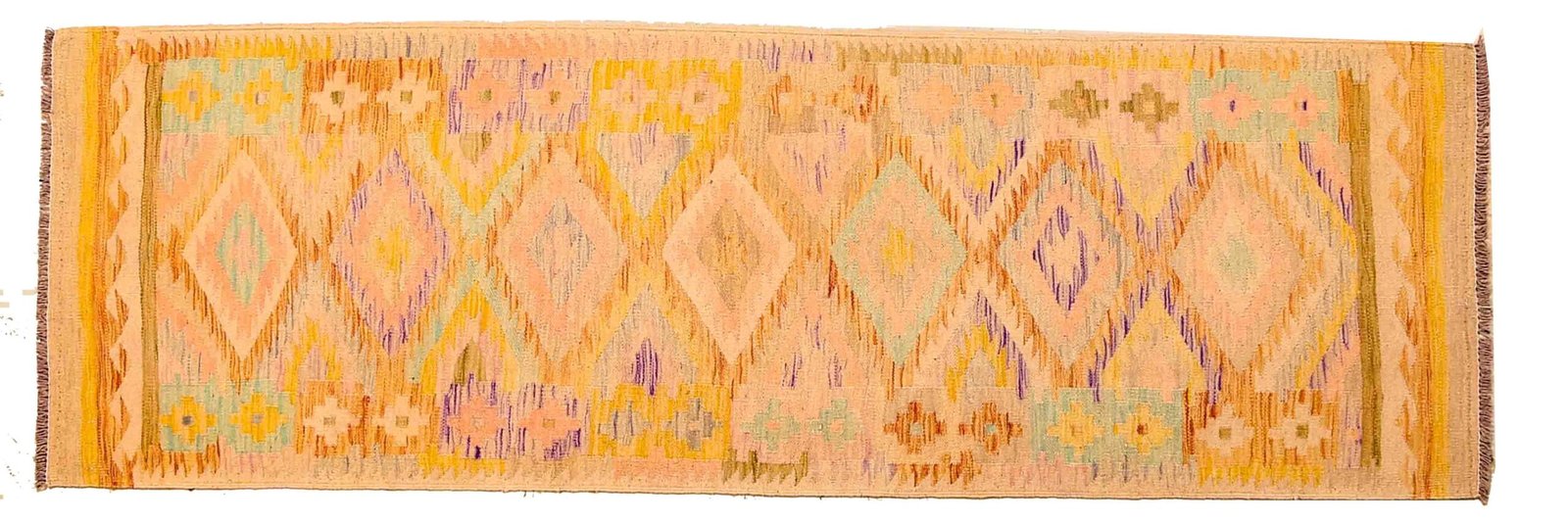
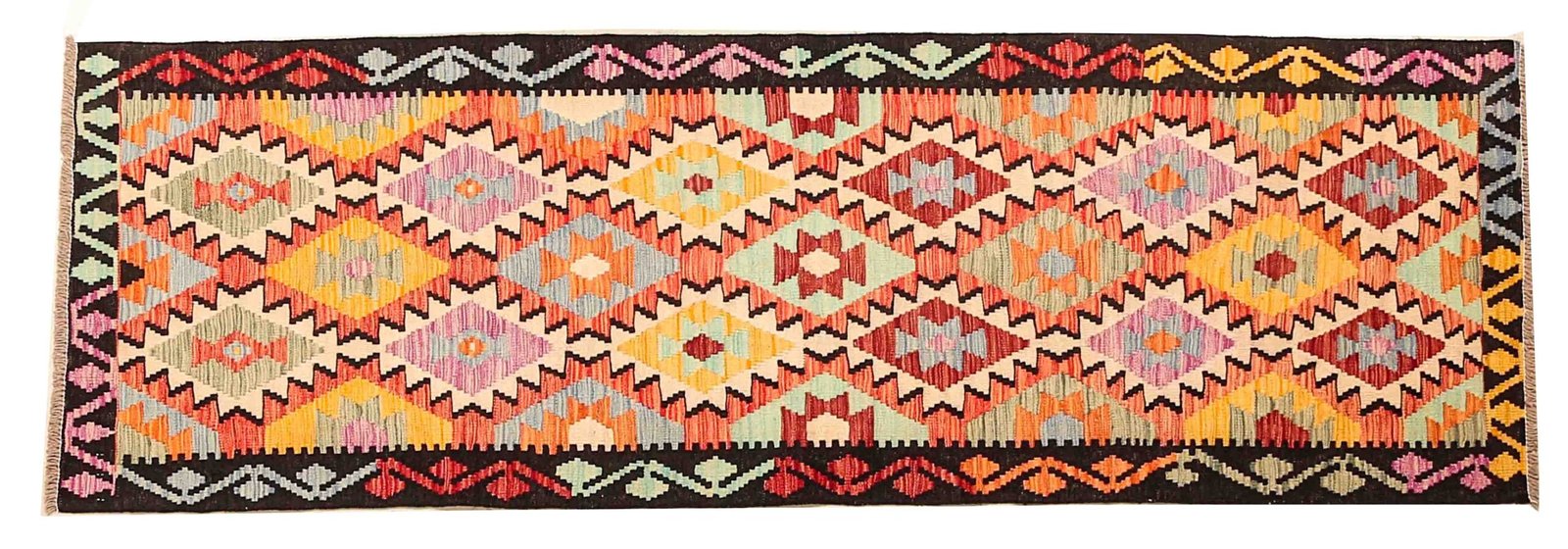
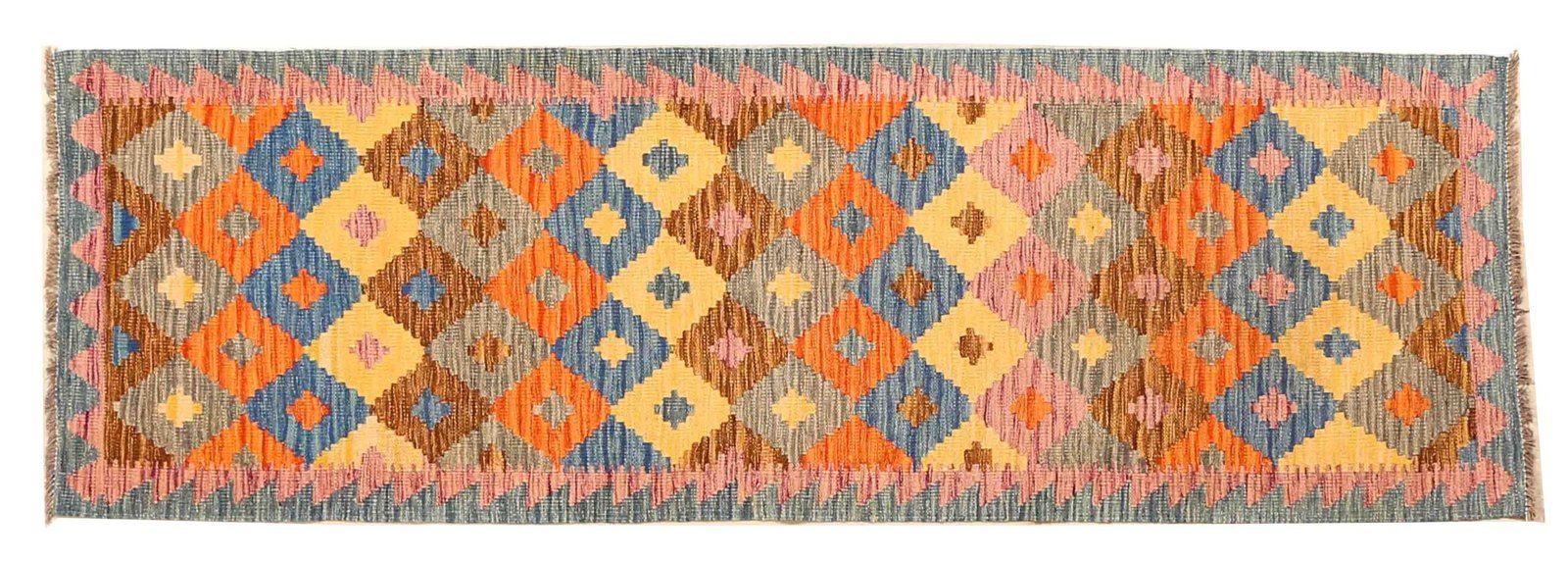
Every runner here is woven by hand and there is only one of each, so when a piece sells, that design is gone for good. Reversible, 3–5mm low profile, pure wool, and free delivery and returns anywhere in the UK.






 Vahvistettu omistaja